Shri Shitala Chalisa is a devotional hymn dedicated to Goddess Shitala, who is revered in Hinduism as the goddess of healing and protection, especially from diseases like smallpox.
The chalisa is written in simple and rhythmic language, making it suitable for people of all ages. It’s often recited during festivals dedicated to Shitala Mata, like Shitala Saptami and Shitala Ashtami.
Who is Shitala Mata? Why is she considered the Goddess of Diseases?
In the Sanatan Hindu tradition, many deities are worshipped as protectors of nature, health, and life. Among them, Shitala Mata is a highly revered goddess. In many states of India—especially Rajasthan, Gujarat, Uttar Pradesh, and parts of Central India—Shitala Mata is worshipped with great devotion.
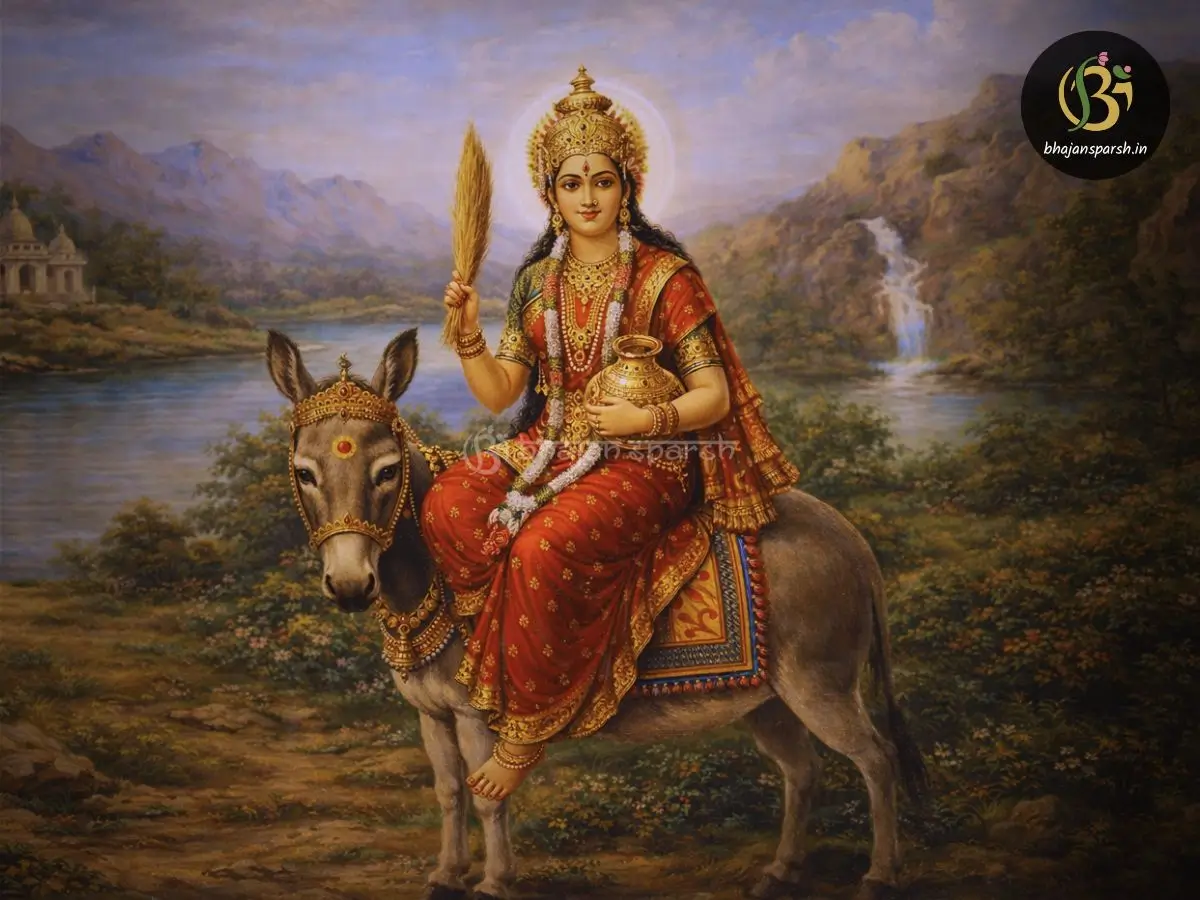
The ancient Hindu scripture Skanda Purana describes Shitala Mata in detail. According to this text, her vehicle is a donkey (gadrabha), and she holds four special objects in her hands:
- A pot (Kalash)
- A winnowing fan (Soop)
- A broom (Marjan)
- Neem leaves
All these objects are believed to carry deep symbolic and medicinal meanings.
The Meaning Behind the Symbols of Shitala Mata: Importance of Kalash, Neem, and Broom
The objects seen in the idol or images of Shitala Mata are not merely religious symbols; they are also associated with health, healing, and protection from diseases.
Kalash (Water Pot)
The cool water kept in the Kalash symbolizes relief and calmness for the patient.
In diseases like smallpox, the body experiences excessive heat and irritation, so cool water was considered very important.
Soop (Winnowing Fan)
In ancient times, a winnowing fan was used to give air to the patient.
It provided cooling and helped reduce restlessness and discomfort.
Marjan (Broom)
The broom symbolizes the removal of diseases.
According to folk beliefs, it represents the bursting and healing of smallpox blisters, indicating the end of illness.
Neem Leaves
Neem has been considered a powerful medicinal plant in traditional Indian medicine.
Its leaves help prevent infection and are beneficial for various skin diseases.
Therefore, the presence of Neem leaves in Shitala Mata’s hands symbolizes her power to destroy harmful germs and diseases.
Why is the Donkey the Vehicle of Shitala Mata?
Shitala Mata’s vehicle is described as a donkey.
According to traditional beliefs, applying donkey dung paste was once considered helpful in reducing the marks left by smallpox.
Which Deities Accompany Shitala Mata?
Shitala Mata is not alone. Several other deities associated with diseases are believed to accompany her:
- Jvarasura – the demon of fever
- Olai Chandi Bibi – the goddess associated with cholera
- Sixty-four diseases – representing various illnesses
- Ghentukarna – deity of skin diseases
- Raktavati – goddess associated with blood infections
This shows that in ancient Indian understanding, diseases were also personified as divine forces.
Lyrics – Shri Shitala Chalisa
॥ Doha ॥
Jai-Jai Mata Shitala,Tumahin Dharai Jo Dhyana ।
Hoya Vimal Shital Hridaya,Vikasai Buddhi Balagyana ॥
॥ Chalisa ॥
Jai-Jai-Jai Shitala Bhawani ।
Jai Jaga Janani Sakala Gunakhani ॥ 1 ॥
Griha-Griha Shakti Tumhari Rajita ।
Purana Sharadachandra Samasajita ॥ 2 ॥
Visphotaka Se Jalata Sharira ।
Shital Karata Harata Saba Pira॥ 3 ॥
Matu Shitala Tava Shubhanama।
Sabake Gadhen Avahin Kama ॥ 4 ॥
Shokahari Shankari Bhawani ।
Bala-Pranarakshi Sukha Dani ॥ 5 ॥
Shuchi Marjani Kalasha Kararajai ।
Mastaka Teja Surya Samarajai॥ 6 ॥
Chausatha Yogina Sanga Me Gavain ।
Vina Tala Mridanga Bajavai ॥ 7 ॥
Nritya Natha Bhairo Dikharavain।
Sahaja Shesha Shiva Para Na Pavain ॥ 8 ॥
Dhanya-Dhanya Dhatri Maharani।
Suranara Muni Taba Suyasha Bakhani ॥ 9 ॥
Jwala Rupa Maha Balakari।
Daitya Eka Visphotaka Bhari ॥ 10 ॥
Ghar-Ghar Pravishata Koi Na Rakshata ।
Roga Rupa Dhari Balaka Bhakshata ॥ 11 ॥
Hahakara Machyo Jagabhari।
Sakyo Na Jaba Sankata Tari ॥ 12 ॥
Taba Maiya Dhari Adbhuta Rupa ।
Karamen Liye Marjani Supa ॥ 13 ॥
Visphotakahin Pakadin Kar Linhyo ।
Musala Prahara Bahuvidhi Kinhyo ॥ 14 ॥
Bahuta Prakara Vaha Vinati Kinha ।
Maiya Nahin Bhala Main Kachhu Chinha ॥ 15 ॥
Abanahin Matu, Kahugriha Jaihaun।
Jahan Apavitra Sakala Dukha Harihaun ॥ 16 ॥
Bhabhakata Tana, Shital Hvai Jaihain ।
Visphotaka Bhayaghora Nasaihain॥ 17 ॥
Shri Shitalahin Bhaje Kalyana।
Vachana Satya Bhashe Bhagawana॥ 18 ॥
Visphotaka Bhaya Jihi Griha Bhai ।
Bhajai Devi Kahan Yahi Upai॥ 19 ॥
Kalasha Shitala Ka Sajavavai ।
Dwija Se Vidhiwata Patha Karavai॥ 20 ॥
Tumhin Shitala, Jaga Ki Mata।
Tumhin Pita Jaga Ki Sukhadata ॥ 21 ॥
Tumhin Jagaddhatri Sukhasevi ।
Namo Namami Shitale Devi ॥ 22 ॥
Namo Sukkhakarani Dukhaharani ।
Namo-Namo Jagatarani Tarani ॥ 23 ॥
Namo-Namo Trailokya Vandini ।
Dukhadaridradika Kandini ॥ 24 ॥
Shri Shitala, Shedhala, Mahala ।
Runalihyunani Matu Mandala ॥ 25 ॥
Ho Tuma Digambara Tanudhari ।
Shobhita Panchanama Asawari ॥ 26 ॥
Rasabha, Khara Baishakha Sunandana।
Gardabha Durvakanda Nikandana॥ 27 ॥
Sumirata Sanga Shitala Mai ।
Jahi Sakala Dukha Dura Parai ॥ 28 ॥
Galaka, Galagandadi Juhoi ।
Takara Mantra Na Aushadhi Koi ॥ 29 ॥
Eka Matu Ji Ka Aradhana ।
Aura Nahin Koi Hai Sadhana ॥ 30 ॥
Nishchaya Matu Sharana Jo Avai ।
Nirbhaya Man Ichchhita Phala Pavai ॥ 31 ॥
Kodhi, Nirmala Kaya Dharai ।
Andha, Driga-Nija Drishti Niharai ॥ 32 ॥
Vandhya Nari Putra Ko Pavai ।
Janma Daridra Dhani Hoi Javai ॥ 33 ॥
Matu Shitala Ke Guna Gavata ।
Lakha Muka Ko Chhanda Banawata ॥ 34 ॥
Yame Koi Karai Jani Shanka।
Hoya Putra Sundara Guna Isa ॥ 35 ॥
Bhanata Ramasundara Prabhudasa ।
Tat Prayaga Se Puraba Pasa ॥ 36 ॥
Puri Tiwari Mora Nivasa ।
Kakara Ganga Tat Durvasa ॥ 37 ॥
Aba Vilamba Main Tohi Pukarata ।
Matu Kripa Kau Bata Niharata ॥ 38 ॥
ada Kshara Tava Asa Lagai ।
Raksha Karahu Shitala Mai ॥ 39 ॥
॥ Doha ॥
Ghat-Ghat Vasi Shitala,Shital Prabha Tumhara ।
Shital Chhaiyan Me Jhulai,Maiya Palana Dara ॥
Importance of Worshipping Shitala Mata
Shitala Mata has traditionally been worshipped for protection from smallpox, skin diseases, and infectious illnesses.
In many regions of India, a special festival called Shitala Saptami (also known as Basoda) is celebrated in her honor.
On this day, devotees offer cold food to the goddess and pray for the health and well-being of their families.