Whenever the saints of Pandharpur’s Vitthal devotion tradition are remembered, the name of Sant Gora Kumbhar is spoken with deep affection. He was neither a saint born in a royal palace, nor one who renounced the world to live in forests. He was a simple potter, shaping earthen pots with his hands—but within that very clay, he molded a form of devotion so profound that it continues to touch hearts even today.
Who was Sant Gora Kumbhar, and why was he called Goroba Kaka?
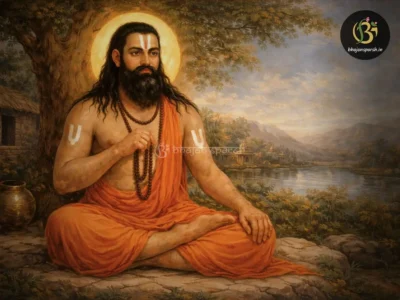
Sant Gora Kumbhar was a great realized saint of Maharashtra’s Warkari tradition. He was a contemporary of the revered saint-shiromani Sant Dnyaneshwar and a devoted worshipper of Lord Vitthal, the presiding deity of Pandharpur. Though living a householder’s life, he practiced such deep renunciation and absorbed devotion that Sant Namdev lovingly referred to him as the “Meru of Vairagya”—the mountain of detachment.
Among the community of saints, he was senior in both age and spiritual experience. His nature was filled with compassion, simplicity, and warmth. It was this gentle authority and loving presence that led saints like Dnyaneshwar, Namdev, and Savata Mali to affectionately address him as “Goroba Kaka” or “Gorai Kaka.”
Birth and Early Life of Vitthal Devotee Sant Gora Kumbhar
In the Osmanabad district of Maharashtra lies the Dharashiv region, where there is a small village called Teradhoki. In ancient times, this village was known as Trayidasha. It was on this sacred land that a saint was born who would later present a remarkable example of devotion, renunciation, and selfless action—Sant Gora Kumbhar.
Saintly traditions generally place his life between 1267 and 1317 CE. Teradhoki was located about thirty kos from the holy town of Pandharpur, and due to this closeness, Gora Ji frequently traveled to Pandharpur. He was a deeply devoted saint of the Warkari tradition.
Gora Ji was not born into royalty, but into a simple potter’s family. His parents, Shri Madhav Ji and Shrimati Rukmini Bai, were gentle, patient, and immersed in devotion. They were steadfast worshippers of Lord Kaleshwar (Shiva), yet they held the same deep reverence for Lord Panduranga Vitthal. In their home, there was no distinction between Hari and Hara—both names were remembered, both were worshipped, and both were seen as one. This sacred atmosphere shaped Gora Ji from his earliest years.
Yet, beneath their devotion, the couple carried a profound sorrow. Madhav Ji and Rukmini Bai were blessed with eight children, but tragically, all of them were claimed by time. The pain was unbearable, yet the sound of bhajan never left their home.
They would often say, “Our Lord is the conqueror of time itself, yet time has taken away our children. If only our last child had survived.” What grieved them most was the thought that no one would remain in their lineage to serve God, the ancestors, and the saints.
In such moments of deep compassion, the Lord Himself appeared at their home one day. He led the couple toward the cremation ground, a place known as ‘Gori’, where it was customary to bury deceased children. There, the Lord gently lifted their last child from the earth and breathed life back into him. The child awakened. Placing the child in the parents’ arms, the Lord disappeared.
Because the child was granted life from Gori, he came to be known as Gora or Gorai.
As he grew, his life became filled with satsang and the remembrance of the Lord’s name. Daily, he participated in holy gatherings, and even while shaping earthen pots, his lips continuously uttered the name of Hari.
On the occasions of Ashadhi and Kartiki Ekadashi, Gorai Kaka would travel with his family to Pandharpur for the darshan of Lord Vitthal and the saints. Whenever time allowed, he would make the journey again. There, he was blessed with the company of great saints such as Sant Namdev, Kanhoba Pathak, Savata Mali, and Visoba Khechar.
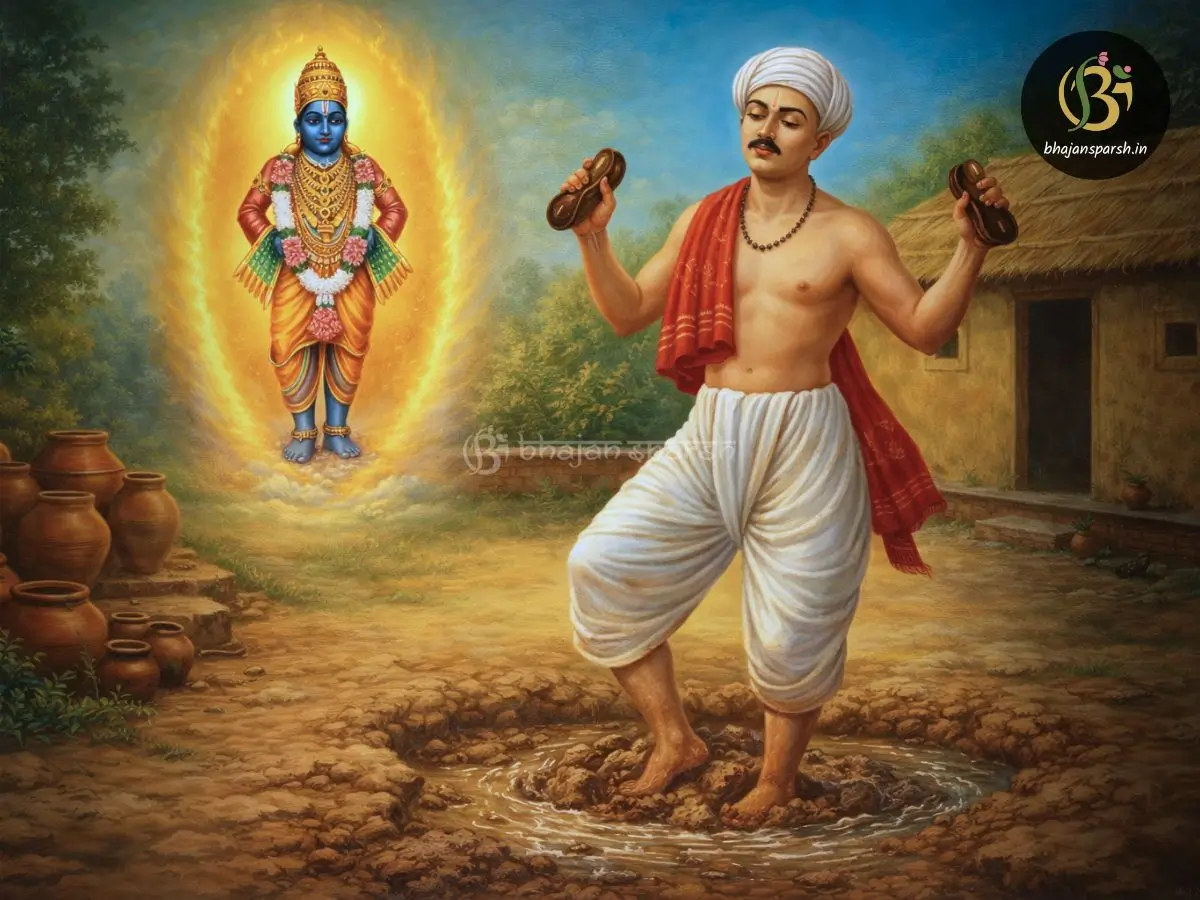
Gradually, Gora Kumbhar’s devotion deepened. Though living the life of a householder, he remained inwardly detached like a true renunciate. Preparing clay by mixing it with water and kneading it with his feet was his daily work. Once the clay became smooth, it was shaped into pots and fired in the kiln.
But for Gora Kumbhar, this was not merely labor—it was spiritual practice. As he crushed the clay under his feet, he became so absorbed in the remembrance of the Lord that he lost all awareness of the world. At times, in that divine ecstasy, he would begin to dance—his feet moving in the clay, while his mind rested at the feet of Panduranga.
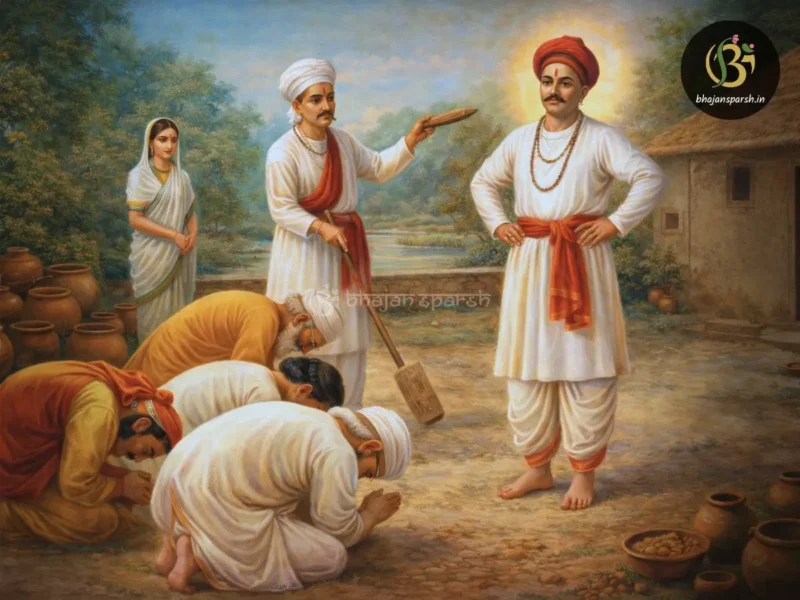
Namdev Attains the True Guru through the Grace of Sant Gora Kumbhar
Sant Shri Gora Kumbhar was that extraordinary realized soul whose insight and spiritual experience removed the ego of Namdev and led him to the vision of the true Sadguru. At that time, Namdev’s fame had spread across the land. His name was known everywhere, and people considered food received from his hands as a blessing of Lord Panduranga Himself.
On the sacred occasion of Kartiki Ekadashi, a large number of devotees gathered in the Pandharpur region to behold the Lord. On that very day, Sant Jnaneshwar, his elder brother and Sadguru Nivruttinath, along with Sopan and their sister Muktabai, arrived in Pandharpur. Though Jnaneshwar was young in age, he was great in yogic realization and spiritual accomplishment. At that time, the sanctity and greatness of these siblings were being discussed throughout the region.
Namdev had been waiting eagerly for a long time to have their darshan. From a distance, on the banks of the Chandrabhaga River, he saw them approaching and was filled with joy. After having darshan of Lord Vitthal, all the saints proceeded to the home of Gorai Kaka.
Everyone was welcomed there with great love and reverence. Namdev stood with his hands on his waist, resembling the posture of Lord Panduranga Himself. Seeing this, Nivruttinath remarked,
“Today, Namdev has manifested here in the form of Panduranga. It is our great fortune to have his darshan.”
All the saints offered sashtang dandavat pranam to Namdev. Jnaneshwar and Sopan also bowed with devotion. According to the Warkari tradition, irrespective of age, every saint deserves reverence.
Standing like Lord Panduranga, Namdev began blessing everyone with a gesture of fearlessness. Within himself, he thought,
“Panduranga is my companion. I dwell constantly in His presence. My salutations are meant only for Him—there is no need for me to bow to anyone else.”
Muktabai had not yet offered her pranam. Nivruttinath said to her,
“Come, Mukta! This great devotee Panduranga has appeared here. Have his darshan.”
Muktabai replied calmly,
“Forgive me, but I see only Panduranga Himself. I do not perceive God within the devotee. Excessive closeness to the Lord has given rise to ego within Namdev.”
Nivruttinath explained,
“Until ego is dissolved, the act of bowing has no meaning. The Lord accepted food from your hands, yet the inner ego still remains.”
Muktabai’s gaze then fell upon the potter’s wooden paddle (thapi) and the earthen pots lying nearby. She asked,
“Kaka, do you use this paddle to determine whether a pot is raw or fully baked?”
Gorai Kaka smiled and replied,
“Yes, child. This is how one tests whether a pot is still raw or properly baked.”
Muktabai said thoughtfully,
“We humans, too, are earthen pots. Please test whether we are raw or mature.”
Gorai Kaka lifted the paddle and gently placed it on everyone’s head. The devotees watched with curiosity and reverence. When the paddle touched Namdev’s head, it produced the sound of a raw pot. Gorai Kaka said,
“See, Nama, this pot is not yet fully baked. It still needs to mature.”
Angered and embarrassed, Namdev protested,
“Gorai Kaka! What kind of behavior is this? Is this the way to show respect?”
With seriousness, Gorai Kaka replied,
“Nama, your knowledge is not yet complete. Ego obstructs devotion. One must bow before a true Sadguru and surrender the ego completely.”
Disturbed by this experience, Namdev went straight to Pandharpur and fell at the feet of the Lord, saying,
“O Lord! All the saints say that my pot is still raw. I have been humiliated. What should I do now?”
Smiling, the Lord replied,
“Nama, your devotion is pure and your generosity is vast, but ego stands in the way of true bhakti. I do not exist only in the idol—I pervade all beings, saints, and every particle of creation. When you behold Me everywhere, distinctions of high and low will disappear. You must take refuge in a realized master.”
Following the Lord’s command, Namdev went to Aundhya Nagnath, where he sought refuge with the Siddha saint Visoba Khechar. There, he witnessed a strange sight—a seemingly mad old man resting with his feet placed upon a Shiva Linga.
Shocked, Namdev exclaimed,
“O revered one! Do you know where you are placing your feet?”
The old man replied simply,
“Son, I am old and weak. My eyesight is poor. I know nothing.”
Namdev insisted,
“You are lying with your feet on the Shiva Linga.”
The old man calmly responded,
“Then place my feet where God is not.”
But wherever Namdev moved the feet, a Shiva Linga appeared beneath them. Astonished, Namdev lifted the old man and placed him elsewhere—yet the Linga appeared there too. Namdev stood speechless.
Placing his hand gently on Namdev’s back, the old man said,
“O Nama! Where God is not—how could you ever find such a place? I am all-pervading. You must understand that the One you fail to see within is your true companion. Saints do not guide merely outwardly—they support and transform from within. Many may help you externally, but only a saint provides inner support.”
Namdev offered sashtang dandavat pranam, surrendering his ego completely. He realized that the divine play of Sant Gora Kumbhar was solely for his spiritual welfare.
Just as a potter shapes a vessel not only from the outside but strengthens it from within, so too do saints mature the soul of a seeker from within. External help may come from many, but inner strength is granted only by saints.
At that very moment, Sant Gora Kumbhar was at his home, kneading raw clay with water beneath his feet, immersed in the chanting of the Lord’s name—engrossed as if he were shaping not just clay, but the entire world from within.
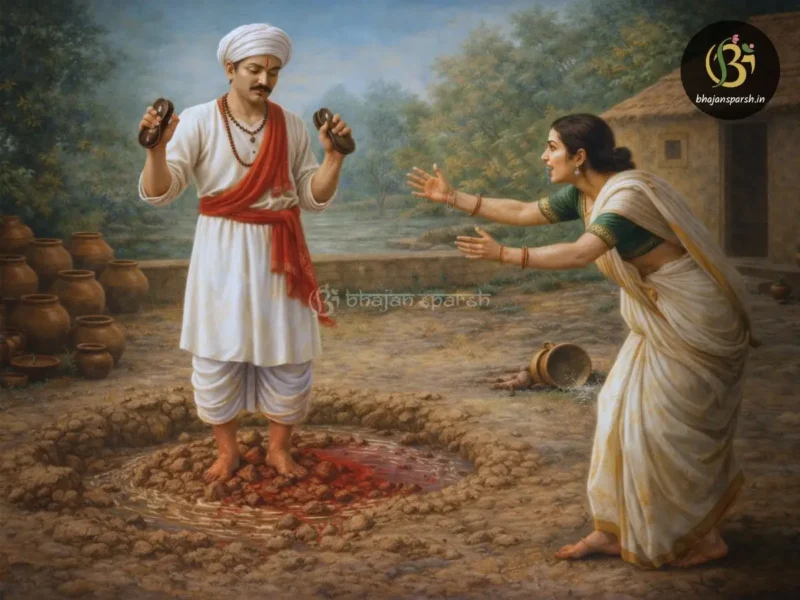
The Child of Sant Gora Kumbhar Buried in Clay and His Wife’s Oath in the Name of God
The life of Sant Gora Kumbhar flowed entirely through clay, devotion, and the constant remembrance of the Divine Name. One day, in the courtyard of his home, he was preparing raw clay by mixing it with water, readying it for shaping earthen pots. As his feet crushed the clay rhythmically, his mind was deeply absorbed in the beautiful form of Lord Vitthal, and from his lips flowed the unbroken chant—
“Harinaam… Harinaam…”
The movement of his feet on the clay and the chanting of God’s Name in his heart became one seamless act of devotion.
At that time, his wife Rami was about to step out to attend to household chores. She said,
“I will leave the child here and go to the river to fetch water. Please keep an eye on him.”
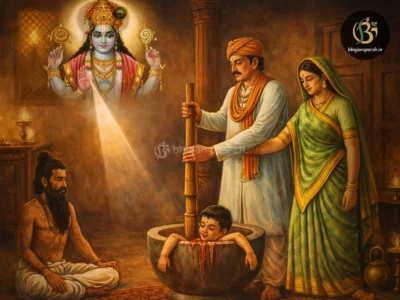
While playing, the little child moved closer toward his father’s feet—perhaps drawn by affection, perhaps wanting to be near him. But Gora Ji’s consciousness was so deeply immersed in the Divine Name that he remained unaware. The child slipped into the heap of clay and was buried beneath it. Within moments, the child’s life came to an end.
When Rami returned, she was met with a horrifying sight. The clay was stained red with blood, and the child was nowhere to be seen. Dropping the water pot from her head, she ran toward Gora Ji, shaking him violently and crying out,
“Save him! Our child… he has been buried alive in the clay!”
Gora Ji came out of his trance. His heart filled with deep remorse, yet inwardly he was a renunciate of the highest order. He reflected—what has happened cannot be undone; grief now serves no purpose. Slowly, his mind returned once again to the remembrance of the Lord.
Consumed by grief and anger, Rami cried out,
“This bhajan and devotion have killed our child! Curse this devotion!”
Hearing these words, Gora Ji felt deep anguish within. In a moment of agitation, he rushed toward her and raised his hand. But Rami cried out instantly,
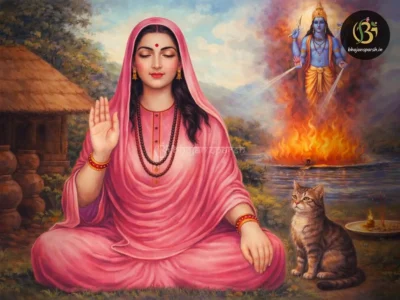
“Stop! Do not touch my body—I swear by your Vitthal!”
At the very mention of God’s name, Gora Ji stepped back, becoming calm and composed.
For several days, tension and distance remained in the household. Later, Rami reflected and thought—this was not done intentionally. She approached Gora Ji and sought forgiveness, saying,
“I took God’s oath in anger. I made a grave mistake.”
Gora Ji replied firmly,
“Once a vow has been taken, it must be upheld. From this moment onward, I will not touch your body.”
After some time, Rami returned to her parents’ home and narrated everything in detail. Concerned about the continuation of the family lineage, her parents suggested,
“If the family line is to survive, your younger sister should be married to Gora Ji.”
Initially, Gora Ji refused, but upon persistent insistence from his father-in-law, he finally agreed.
On the day of the marriage, his father-in-law said to him,
“You must treat both sisters equally. There should be no discrimination.”
Gora Ji reflected deeply—
“I cannot touch the elder sister, and now my father-in-law asks me to treat both equally.”
At that very moment, he resolved firmly that he would not touch the younger wife either. It was difficult to explain this decision to both sisters. The younger one broke down in tears, while the elder sister gently comforted her and helped her accept the situation.
When Sant Gora Kumbhar Cut Off His Hands and the Lord Himself Served in His Home
One night, both of Gora Ji’s wives lay down to sleep on either side of him. In their sleep, they unknowingly held Gora Ji’s hands and placed them upon their chests. When Gora Ji awoke and realized what had happened, his heart trembled. He said to himself,
“These hands are sinful. They have forgotten the sacred vow sworn in the name of my beloved Vitthal. Such hands deserve punishment.”
Nearby, in the fields, lay sharp, pointed stones used for laying floors. Sant Gora Kumbhar walked there silently and rubbed both his hands against those stones until they were completely severed.
With his hands gone, his livelihood came to a halt. His body grew weak and exhausted, yet his mind remained unwavering in the remembrance of God. Even the dog in his household refused to leave his side. Gora Ji and his wife Rami lived in deep austerity—absorbed in fasting and devotion. At dawn, they would rise and immerse themselves in the chanting of the Divine Name and meditation on the Lord’s form. They did not wish to seek help from anyone, nor would Gora Ji allow his wife to ask for assistance. Gradually, his body grew frail and lifeless.
The Lord Sri Krishna observed all this. He reflected,
“The suffering of such a devoted soul cannot be endured.”
Yet, this was also a test—of Gora Ji’s vow and the depth of his devotion. Mother Rukmini, unable to bear it any longer, questioned the Lord insistently. The Lord then revealed everything—Gora Ji’s condition had arisen because of the vow taken in His own name.
Thereafter, the Lord enacted a wondrous divine play. He Himself assumed the form of a potter, Mother Rukmini became a potter woman, and Garuda took the form of a donkey. Together, they arrived at Gora Ji’s home.
With utmost humility, the Lord in the form of a potter said,
“We have come from Pandharpur seeking work. If there is any potter’s work here, we are ready to do it.”
Gora Ji replied,
“There is work, but I have no money. I cannot pay wages.”
Smiling gently, the Lord said,
“That is no problem. Just let us listen to your kirtans and give us two meals a day.”
Gora Ji welcomed them into his home. The Lord, now known as Vithu the potter, performed every task with dedication and perfection—bringing clay each morning on the donkey, shaping pots, carving exquisite designs. Mother Rukmini assisted Him in every way. Slowly, Gora Ji’s household and livelihood began to flourish once again.
The villagers and people from nearby areas were astonished.
“At Gora Kaka’s home,” they whispered,
“there lives a potter named Viththal, who works without wages—asking only for kirtan and devotion.”
As Ashadhi Ekadashi approached, great saints such as Nivruttinath, Jnanadev, and Muktabai arrived in the village during their pilgrimage. They had heard that the Lord Himself was serving in Gora Ji’s home. When they arrived, they witnessed an extraordinary sight—a divine harmony of kirtan, devotion, and selfless service.
Seeing the saints, Gora Ji ran toward them like a child—tears flowing from his eyes, his heart overflowing with love.
Jnanadev Ji beheld the scene and declared,
“Gorai Kaka! This is no ordinary potter. This is Pandharinath Sri Krishna Himself. Moved by your love and devotion, He has come to serve in your home. Blessed are you, and blessed is your devotion.”
How Did Sant Gora Kumbhar Get His Hands Back? A Miraculous Divine Story
Shri Jnanadev asked Gorai Kaka’s wife to bring the pots made by the Lord Himself. When Sant Namdev looked at those vessels, he saw a divine glow and radiant light emanating from each one. As soon as he lifted a pot and brought it close, a wondrous sound of “Vitthal, Vitthal” arose from within it.
Witnessing this extraordinary divine play, all the saints and devotees present began chanting praises of Gorai Kaka. Filled with devotion and joy, everyone bowed at his feet with deep reverence.
The sacred day of Ashadhi Ekadashi arrived. The streets of Pandharpur were filled with devotees, saints, and an atmosphere charged with enthusiasm and devotion. Gora Kumbhar arrived there with his two wives, Santi and Rami. First, they took darshan of Lord Vitthal and then met Sant Namdev. Seeing Gorai Kaka, Namdev was overwhelmed with emotion—a blend of reverence and astonishment filled his heart.
Gorai Kaka humbly requested,
“O saints, please sing kirtan.”
Namdev hesitated slightly, as Gorai Kaka’s condition filled his heart with compassion. But at the insistence of all the saints, he began the kirtan.
Soon, the entire Pandharpur resonated with—
“Vitthal, Vitthal, Pandurang! Jai Jai Ramkrishna Hari!”
The rhythm of cymbals and drums, the clapping of hands—everything together immersed the atmosphere in divine devotion. Gorai Kaka danced joyfully, completely absorbed in bliss.
Then, a miraculous event occurred—
The severed hands of Gorai Kaka slowly began to reappear. As his hands were fully restored, he lifted them high and clapped while dancing in ecstasy. Saints and devotees were astonished and overjoyed at this divine sight. Lord Vitthal Himself danced in the kirtan, deeply pleased by Gorai Kaka’s unwavering devotion.
Both of Gorai Kaka’s wives, Santi and Rami, were filled with joy and love. From their lips too flowed the chant, “Vitthal, Vitthal, Pandurang.”
Immediately after the kirtan ended, yet another miracle took place. Rami felt someone near her feet calling out, “Mother! Mother!” When she looked down, she was stunned—it was the very same child who had earlier died after being buried in the clay. Tears of divine joy flowed from her eyes due to Lord Pandurang’s grace.
Standing among the crowd, Sant Namdev’s maid-servant, Sant Janabai, was also left speechless witnessing this divine vision. Lord Pandurang appeared before Gorai Kaka, embraced him warmly, and said—
“You refrained from touching your wives because of your vow taken in My name. Now you are free from all such vows. Live lovingly with your family and remain absorbed in devotion and bhajan.”
After blessing the other saints as well, the Lord disappeared from sight.